

Trekkers Nepal
Registered
Just a few hours north of Kathmandu, the crowded streets give way to terraced hills, then pine forest, then finally the open, glacier-carved valleys of Langtang National Park. It's one of the most rewarding and most underrated trekking destinations in Nepal, offering everything from sacred lakes to red panda habitat, without the crowds you'll find on the Everest or Annapurna trails.
If you're planning a Himalayan trek in 2026, here's everything you need to know before you go.
Within that space sits an extraordinary range of terrain subtropical forest at the lower elevations, rhododendron and pine higher up, and finally bare alpine ground beneath peaks that climb past 7,000 meters. That range in elevation is exactly what makes Langtang so biologically rich, and it's part of why the park earned international recognition as a critical habitat for endangered species.
Just as important, the park protects people as much as wildlife. The Tamang and Hyolmo communities living in its valleys have kept their Buddhist traditions, monasteries, and mountain hospitality alive for centuries something you'll experience firsthand at every teahouse stop along the trail.
In terms of fitness, most routes require good general health and several hours of daily walking rather than technical climbing skills. Preparing with regular cardio and some hill training in the weeks before your trek will make a real difference in how much you enjoy it.
Because several trails climb above 3,000 meters, altitude sickness is a genuine consideration. Walk at a steady pace, stay well hydrated, avoid alcohol at altitude, and build in acclimatization days particularly around Kyanjin Gompa before pushing higher.
Langtang National Park Permit Fees (2026):
Trekkers Nepal has been guiding travelers through the Himalaya for years, handling permits, guides, and logistics so you can focus on the journey. Get in touch with Trekkers Nepal today to start planning your Langtang adventure.
If you're planning a Himalayan trek in 2026, here's everything you need to know before you go.
A Park Built to Protect Both Land and Culture
Established in 1976, Langtang holds the distinction of being Nepal's first national park in the Himalayan region and the country's fourth protected area overall. It spans roughly 1,710 square kilometers across the Rasuwa, Nuwakot, and Sindhupalchok districts, stretching all the way to the Tibetan border.Within that space sits an extraordinary range of terrain subtropical forest at the lower elevations, rhododendron and pine higher up, and finally bare alpine ground beneath peaks that climb past 7,000 meters. That range in elevation is exactly what makes Langtang so biologically rich, and it's part of why the park earned international recognition as a critical habitat for endangered species.
Just as important, the park protects people as much as wildlife. The Tamang and Hyolmo communities living in its valleys have kept their Buddhist traditions, monasteries, and mountain hospitality alive for centuries something you'll experience firsthand at every teahouse stop along the trail.
How to Get There
Most Langtang treks begin in Syabrubesi, a village roughly 120 kilometers from Kathmandu. The drive takes about seven to eight hours by local bus or four to five hours by private jeep, winding along mountain roads with views that make the journey part of the adventure itself. Many trekkers break the drive into two days, spending a night in Dhunche to ease into the altitude gradually.Highlights Along the Trail
- Witness towering views of Langtang Lirung (7,227 m) and the surrounding Himalayan peaks.
- Visit Kyanjin Gompa, a centuries-old monastery village that serves as base camp for most trekkers in the valley.
- Hike to high-altitude viewpoints Kyanjin Ri (4,773 m) or Tserko Ri (around 5,000 m) for sweeping panoramas.
- Walk to the sacred Gosainkunda Lakes, a site of deep spiritual significance for Hindu and Buddhist pilgrims.
- Pass through fragrant forests of rhododendron, oak, pine, and bamboo along the trail.
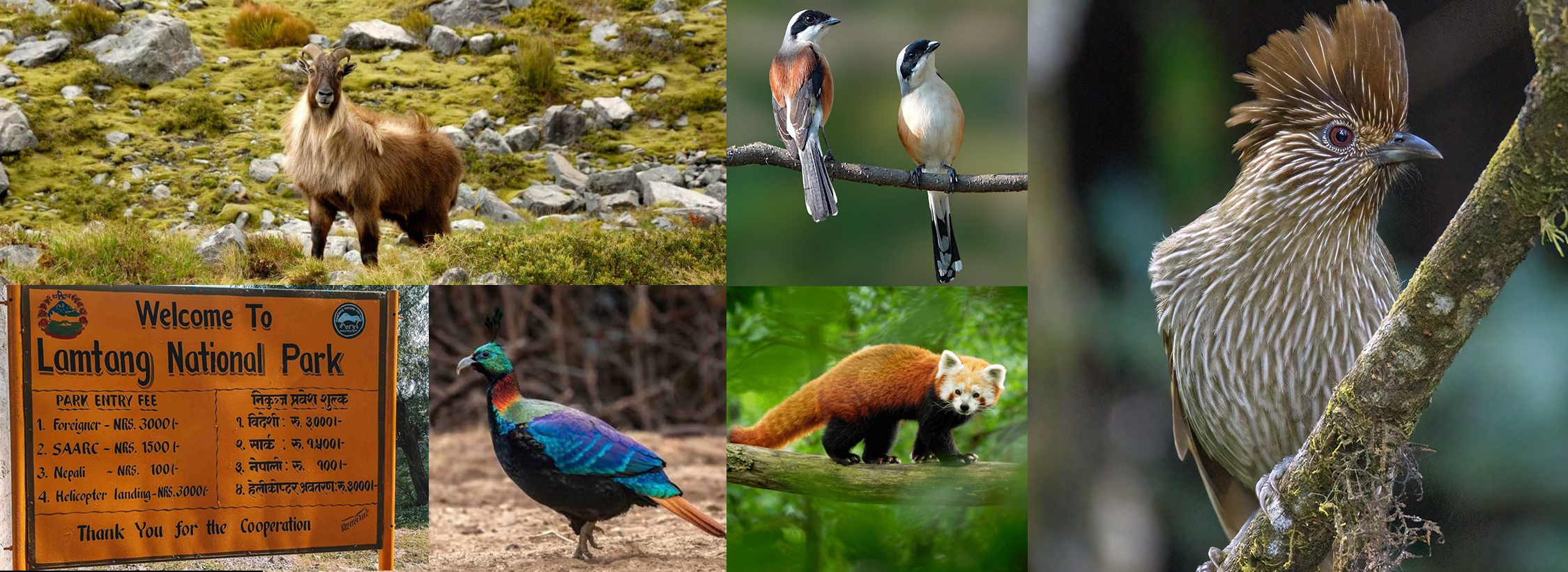
- Spot rare wildlife including the elusive red panda, snow leopard, musk deer, and Himalayan tahr.
- Birdwatch across more than 250 recorded species, including the vividly colored Himalayan monal, Nepal's national bird.
- Experience genuine Tamang and Hyolmo hospitality at teahouses along the route.
Choosing Your Route
- Langtang Valley Trek (7–10 days): The classic route from Syabrubesi to Kyanjin Gompa. Moderately difficult and well suited to first-time Himalayan trekkers with reasonable fitness.
- Gosainkunda Trek (5–7 days): A pilgrimage-focused route through rhododendron forest to the sacred lakes.
- Helambu Trek (5–8 days): A gentler, culture-rich trail through traditional Hyolmo villages.
- Langtang Valley & Gosainkunda combined (12–15 days): For trekkers wanting the best of both routes.
- Ganja La Pass Trek (14–18 days): A demanding high-altitude crossing over the 5,122-meter Ganja La Pass, reserved for experienced trekkers.
What to Expect on the Trail: Accommodation, Food, and Fitness
Langtang is a teahouse trekking region, meaning you won't need to carry camping gear. Simple family-run lodges line the route, offering basic private or shared rooms, hot meals, and at lower elevations even WiFi and hot showers for a small fee. Expect hearty staples like dal bhat, noodle soups, and momos, with menu options thinning out the higher you climb.In terms of fitness, most routes require good general health and several hours of daily walking rather than technical climbing skills. Preparing with regular cardio and some hill training in the weeks before your trek will make a real difference in how much you enjoy it.
Because several trails climb above 3,000 meters, altitude sickness is a genuine consideration. Walk at a steady pace, stay well hydrated, avoid alcohol at altitude, and build in acclimatization days particularly around Kyanjin Gompa before pushing higher.
Permits and Guides
Before setting foot on the trail, every trekker needs to sort out two things: a park entry permit and, in most cases, a licensed guide. Entry into Langtang National Park requires a paid permit, priced differently depending on nationality, and a TIMS card is generally required as well something registered trekking agencies typically arrange as part of a group booking. On top of the paperwork, current regulations require most foreign trekkers to hire a licensed guide in Nepal's national parks, Langtang included. Beyond simply meeting that requirement, a good guide adds real value on the ground managing logistics, reading trail and weather conditions, recognizing early signs of altitude sickness, and connecting you meaningfully with local culture along the way.Langtang National Park Permit Fees (2026):
- Foreign Nationals: NPR 3,000 per person
- SAARC Nationals: NPR 1,500 per person
- Nepali Citizens: NPR 100 per person
- Children under 10: Free
- TIMS Card: required for most trekkers, usually arranged by your trekking agency
Best Time to Trek
Spring (March–May) brings blooming rhododendron and strong wildlife-spotting odds. Autumn (September–November) offers the most stable weather and clearest mountain views. Winter turns the valley into a hushed, snow-draped landscape for hardier adventurers, while monsoon (June–August) brings wetter trails but far fewer crowds and lower costs.Ready to Experience Langtang?
Langtang National Park distills everything remarkable about the Himalaya dramatic peaks, sacred lakes, rare wildlife, and living mountain culture into one accessible, uncrowded corner of Nepal. Whether you're drawn to a short valley walk or the full Gosainkunda crossing, the right local team makes all the difference.Trekkers Nepal has been guiding travelers through the Himalaya for years, handling permits, guides, and logistics so you can focus on the journey. Get in touch with Trekkers Nepal today to start planning your Langtang adventure.
Last edited by a moderator: